
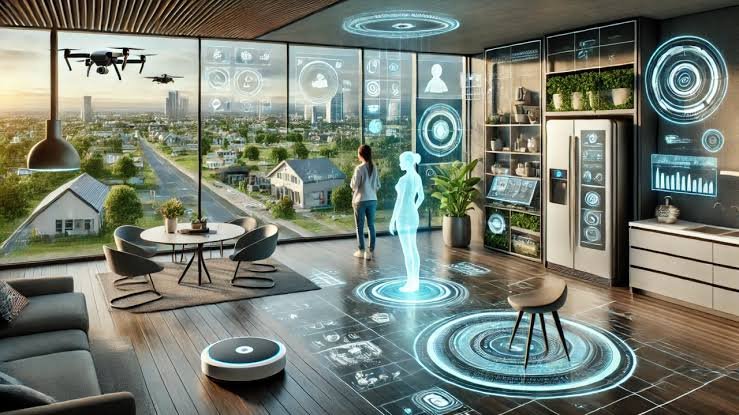
10 Amazing Ways AI Smart Homes Are Transforming Modern Living
The idea of a smart home has changed dramatically in recent years. What once meant controlling a few lights or checking a security camera from a smartphone has evolved into something much more advanced. Today, AI smart homes can understand routines, respond to voice commands, automate everyday tasks, improve security, and even make decisions based on the habits of the people living inside them.
Artificial intelligence is becoming an important part of modern home technology because it allows connected devices to work together rather than operate as separate gadgets. Instead of simply following a programmed command, AI-powered systems can learn from patterns and make home automation more convenient, efficient, and personalized.
What Are AI Smart Homes?
AI smart homes are homes that use artificial intelligence together with connected devices and home automation systems. These technologies can include smart thermostats, lighting systems, security cameras, door locks, appliances, speakers, sensors, and entertainment devices.
A traditional smart device may perform an action when a homeowner gives it a specific command. An AI-powered device can go a step further by analyzing information and adapting to changing circumstances.
For example, an ordinary smart thermostat might allow you to change the temperature remotely. An AI-powered thermostat can learn when you normally arrive home, recognize temperature preferences, and adjust the environment automatically. This combination of connectivity and intelligent decision-making is what makes AI smart homes increasingly attractive.
How Artificial Intelligence Makes Homes Smarter
The biggest advantage of AI is its ability to learn from data and recognize patterns. Over time, an AI home system can understand how residents use different devices.
Imagine that a homeowner normally turns on the kitchen lights at 6:30 in the evening and lowers the bedroom temperature before going to sleep. An intelligent home system may recognize these habits and automate them without requiring a separate command every day.
AI can also connect information from multiple devices. A smart security camera might detect movement, while door sensors and other connected devices provide additional information. Instead of treating each event independently, an intelligent system can use several signals to provide a more useful response.
This makes home automation feel less like operating a collection of gadgets and more like interacting with a coordinated system.
AI Smart Home Security
Security is one of the most important applications of artificial intelligence in the home. Modern smart security systems can use AI-based technologies to analyze video, identify unusual activity, and send alerts to homeowners.
Smart cameras can potentially distinguish between people, animals, and ordinary movement. This can reduce unnecessary notifications and help homeowners focus on events that may actually require attention.
AI-powered locks and doorbells can also contribute to home security. Residents may receive notifications when someone approaches the property, while smart locks can provide convenient access without traditional keys.
However, homeowners should remember that no technology can guarantee complete security. Strong passwords, software updates, secure Wi-Fi networks, and appropriate privacy settings remain essential.
Energy Efficiency and Cost Savings
Another major benefit of AI smart homes is improved energy management. Heating, cooling, lighting, and appliances can consume a significant amount of household energy. Intelligent automation can help reduce unnecessary use.
An AI-powered thermostat, for instance, may learn the household’s schedule and adjust heating or cooling when people are away. Smart lighting can turn lights off automatically in empty rooms, while connected appliances can provide information about energy consumption.
The goal is not simply to make a home more technologically advanced. A well-designed system can make everyday energy use more efficient while maintaining comfort.
Actual savings will depend on the home, devices, energy prices, climate, and how the technology is configured. Still, intelligent energy management can be a useful part of a broader strategy for reducing household consumption.
Convenience in Everyday Life
Convenience is perhaps the most obvious reason people are interested in AI smart homes. Many routine activities can be automated or controlled through voice commands and mobile applications.
A homeowner might ask an AI assistant to adjust the lights, play music, change the thermostat, or provide information about the day’s schedule. Automated routines can also coordinate several actions at once.
For example, a “good morning” routine could gradually turn on bedroom lights, adjust the thermostat, and provide selected information through a smart speaker. A bedtime routine could turn off selected lights, lock compatible doors, and adjust the temperature.
These small improvements can make daily life easier, especially for people who prefer hands-free control.
Personalization and the Future of Home Automation
The future of AI smart homes is likely to focus heavily on personalization. Instead of homeowners constantly telling devices what to do, systems may increasingly anticipate needs based on established preferences and routines.
Future technologies could make homes more responsive to changes in occupancy, weather, energy demand, and individual preferences. AI may also help different brands and types of smart devices communicate more effectively.
At the same time, privacy will remain an important issue. Smart homes can collect information about schedules, preferences, device usage, and activity. Consumers should understand what information their devices collect, where it is stored, and how it is used.
Are AI Smart Homes Worth It?
For many homeowners, AI smart home technology can offer a useful combination of convenience, security, and efficiency. However, buying every available smart device is not necessary.
A better approach is to start with a specific goal. Someone interested in saving energy might begin with a smart thermostat. A homeowner focused on security could consider smart cameras, sensors, or a connected doorbell. Others may prefer smart lighting or voice-controlled entertainment.
Choosing compatible devices and paying attention to security and privacy can make the overall experience much better.
FAQs About AI Smart Homes
1. What is an AI smart home?
An AI smart home is a home that uses artificial intelligence and connected devices to automate tasks, learn household routines, improve security, and provide personalized control over different home systems.
2. How does AI work in a smart home?
AI analyzes information from connected devices, sensors, and user interactions. It can recognize patterns and use them to automate actions such as adjusting temperature, controlling lights, or sending security alerts.
3. What devices can be used in an AI smart home?
Common devices include smart thermostats, security cameras, smart locks, lighting systems, speakers, sensors, appliances, doorbells, and entertainment systems.
4. Can AI smart homes save energy?
Yes. AI can help reduce unnecessary energy consumption by learning household routines and automatically adjusting heating, cooling, lighting, and other connected devices when they are not needed.
5. Are AI smart homes secure?
AI-powered security devices can improve home protection by detecting unusual activity and sending alerts. However, homeowners should also use strong passwords, secure Wi-Fi, regular software updates, and appropriate privacy settings.
6. Can an AI smart home learn my daily routine?
Many AI-powered systems are designed to recognize patterns in device usage. Over time, they may learn preferences such as preferred temperatures, lighting schedules, or regular household routines.
7. Can I control an AI smart home with my voice?
Yes. Compatible smart home systems can allow users to control lights, thermostats, entertainment devices, and other connected products through voice commands.
8. Do AI smart homes require an internet connection?
Many smart home features rely on an internet connection for remote access, cloud services, updates, or advanced AI functions. However, some devices can perform certain local functions without the internet.
9. Are AI smart homes expensive?
The cost varies depending on the number and type of devices installed. Homeowners can start with a few affordable devices and gradually expand their smart home instead of purchasing everything at once.
10. What is the future of AI smart homes?
The future of AI smart homes is expected to focus on greater personalization, automation, energy efficiency, security, and easier communication between different devices. AI may increasingly help homes respond automatically to the needs and preferences of residents.
Conclusion
AI smart homes represent an important development in home automation. By combining connected devices with artificial intelligence, homes can become more responsive, personalized, and efficient. From intelligent security systems and energy management to automated routines and voice control, AI can simplify many aspects of everyday living.
The technology is still developing, and its future possibilities are considerable. However, the most valuable smart home is not necessarily the one with the most devices. It is the one that uses technology in practical ways to make life safer, easier, and more comfortable.
As artificial intelligence continues to improve, AI smart homes are likely to become an increasingly familiar part of modern living.



One Comment